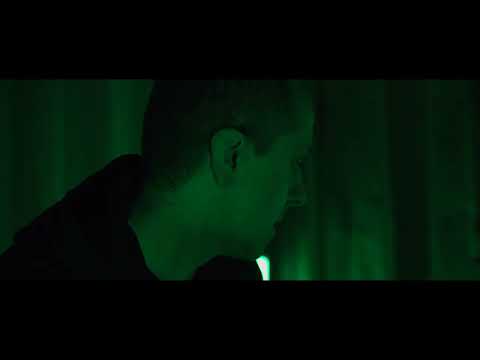
Today we organised the audio for our opening sequence as this is a major part of our opening sequence. We converted a piece of non-copyrighted coffeehouse jazz music into an MP3 format and added it to Adobe Premiere Pro as non-diegetic sound. This happens when the radio is turned on in one of our shots however is disrupted a few times which we had to edit on our opening sequence by cutting certain parts of it. We had to edit the volume in certain shots as Adam does two very loud screams which we made slightly quieter. We also added a punching sound effect when Ali gets hit by layering multiple sounds over each other using a crunchy sound effect of dog eating food, a sound effect of a metal hammer being hit and a sound effect of a wooden hammer being hit to create this overall effect.
Tuesday, 29 March 2022
Monday, 28 March 2022
Editing 3
In our lesson today, we continued to order and cut our footage. We added our black borders on the sequence using the template graphics to create the wide screen effect and tilted the y-axis on some of our shots to make it have a better overall look. One of our shots had the microphone boom in it so tilting the angle of this part of the footage helped this not to be in the shot. We experimented with the pace of some of the shots to see if anything would look more effective however we did not end up using this. Next we will be adding the diegetic sound effect we have chosen in our editing session.
Sunday, 27 March 2022
Editing 2
In our editing session today we began to order and cut our footage. We haven't focused much on the audio yet but instead on the violent scenes as this was something where the continuity had to be very seamless as there was not any real violence used so it needed to look realistic. I noticed that some of the shots that were filmed in the mirror could not be used as you could see the side of the camera in the reflection of the mirror therefore we won't be using those shots. We had to trial and error with our shots to see which would look most effective however we did not change anything from our original concept when shooting and there were many successful shots as we used our time efficiently when filming so am overall very happy with the footage.
Saturday, 26 March 2022
Editing 1
![]() |
| Adobe Premiere Pro |
Friday, 18 March 2022
Our Mise-En-Scene Choices
Wednesday, 9 March 2022
Shoot day reflection
Tuesday, 8 March 2022
Saul and Elaine Bass
Saul Bass was an American filmmaker and graphic designer who was born in 1920 and died in 1966.
Elaine Bass is Saul Bass's wife who is also an American title designer and filmmaker. She worked with Saul Bass for over 40 years where they created opening sequences for directors such as for directors such Martin Scorsese and Danny DeVito Some of his famous works include The Man with the Golden Arm, North by Northwest and Psycho which he created the title sequences for as this was his speciality. He is famous for using posters and logos in his title sequences with motion pictures. The designs that Saul Bass used portrayed meaning which he did though using ideas from the whole film and placed them in the opening sequence. Saul Bass was a major pioneer of modern title sequence designing. This is one of the many successful opening title sequences that Saul Bass and Elaine Bass created together.Big opening title sequence - Saul and Elaine Bass
Another famous opening title sequence created by Saul Bass is Vertigo (1958). Through this opening title sequence, he engages the audience through his creative visuals when displaying the credits. He uses kinetic typography which is an animation technique which combines motion and text within a video whilst portraying different concepts and ideas. Kinetic typography only began to be used in the 1960's with Saul Bass's opening title sequence for North by Northwest (1959) to start this trend where it is now commonly
used. Bass had the intention of portraying the mood and atmosphere of the film through this opening where he used non-diegetic sound of fast-paced music which creates an unsettling mood for the audience. This portrays the thriller genre as the soundtrack begins to crescendo whilst the sudden noises of brass instruments portrays an intense, eerie mood and creates suspense. This opening title sequence also hints at the narrative as it reveals the theme of crime which hints to the main character who is a detective. This is done through the use of the company cards which are in black and white conveying a dark neo-noir style. The colour then changes to technicolour combined with a sepia tint, dark background and lowlighting portraying an element of mystery hinting at this thriller genre of the film. This is also emphasised by the change in volume of the music as it goes from loud to quiet and is slower which builds suspense. Saul Bass also introduces a character through a close up shot of the woman's face then pans to an extreme close up of of the woman's nose and lips which are trembling. This suggests romance which links to the narrative of the rest of the film as the main character has a strange obsession with the woman and portrays her fear. In thriller films, it is very common for the female character to be portrayed a vulnerable which is displayed in this opening title sequence through her nervous looking facial expressions. Her eyes are looking side to side which emphasises the fact she is being watched linking to the narrative of the film of having an obsession with her. The camera then zooms into an extreme close up shot of one of her eyes. Whilst this is happening, the colour used changes to a red hinting at a sense of danger portraying the thriller genre. The title of 'Vertigo' then gets bigger along with her eyes portraying a sense of anxiety. Saul Bass uses graphics to show spirograph images which come out from the female's eye perhaps linking to her state of mind. The pace of the music then begins to get slower and the viewer continues to see a range of spirographs which are colours such as blue, purple, orange and red. This links to vertigo and the paranoia of the females character. Saul Bass then uses the image of the red eye which then fades as the film is about to begin. Through this opening title sequence, Saul Bass introduces the audience to parts of the narrative, the female character and portrays the genre through mainly suspense.Thursday, 3 March 2022
The BBFC
The BBFC stands for The British Board of Film Classification which regulates the British film Industry. They create and set the rules of what can and can't be shown in films as well as allocating the age certificates of films in the UK. As the BBFC have this title, this allows film audiences to complain if they dislike the content within the film. The only way a film can be released in Britain, the cinema or DVD unless it has received this age classification from the BBFC.
These are all the age certificates in the UK:
When awarding film certificates The BBFC consider...
- Scenes including violence of all kinds
- Scenes including sex and nudity
- Scenes including obscene language
- Scenes of self harm
- Scenes of criminal activity
- Scenes with dangerous behaviour
- Scenes of drugs, alcohol and cigarettes
- Scenes involving child actors/characters
- Strobe lighting
The BBFC also have to consider context when awarding film certificates. For example, this could include if a film is fantasy based, animated or realistic. However when a film is fantasy based or animated, they can often include more violence compared to a realistic film whilst having a lower age certificate. This is due to The BBFC believing that audiences will realise that it is not real and does not usually involve any serious injury. Another element of film that The BBFC consider when assigning age certificates is how certain issues are handled. An example of this is the use of drugs. A film might be given a lower film certificate if drug use is portrayed as negative in a sensitive fashion contrasting with drug use being portrayed as consequence free and normalised would often be given a higher film certificate.
Violence is a major element of film which makes the age certificate vary. For example...
- Is the violence made to seem normal
- Why are they being violent... is is self defence?
- What injuries or harm are caused?
- Who is it that is violent eg hero or villain?
- How does the perpetrator treat the victim?
- Is the violence enjoyed?
- Is the violence made to seem exciting or glamorous?
- How much violence is there?
- How realistic is the violence?
- Does the violence get punished?
The format of release also effects the age certificates such as The BBFC commonly use a higher age certificate when films are released on DVD compared to cinema where it is slightly more relaxed. For example, The Hunger Games has the 12A certificate when released in cinema however on the DVD release this is different. The BBFC decided to raise it to a 15 instead on the DVD release.
The process of assigning age certificates begins with the production company sending a copy of the film to The BBFC for them to watch and decide the certificate. This allows the film to be released on cinema or DVD however this age certificate can be changed if the company isn't happy with it as long as they re-edit the film.
As a production group, we decided that our opening sequence would have a 15 age certificate. This is because a 15 often has strong language, violence, sex and drug use. Our opening sequence includes a lot of violence and a short scene of alcohol use. However, we don't believe that the content is strong enough that it would offend adult viewers which would make it an 18.
Similar products and conventions
Our production group are creating an opening sequence which is a thriller-action film which is a hybrid genre. We researched into different media products from the same genre as our opening sequence. Some of these include Nerve, Saw, Squid Game and Nobody.
Nerve
Nerve was directed by Ariel Schulman and Henry Joost. The film was distributed by Lionsgate Films in 2016. The film portrays the storyline of society being addicted to a 'truth or dare' style app where you receive money for what you complete. However, it gets twisted where people even die from the game as they will do anything for money. As a production group, we were inspired by their use of setting with the shipping container scene which she wakes up in. We adapted this location and put our own twist on it but decided that we like the visual aesthetic of the neon green lighting used and the location of a shipping container. The choice of this location that we use in our opening sequence creates suspense adding to the thriller conventions as the characters are trapped in this shipping container with no escape. It also is different from using a stereotypical attic/basement which is a common use of location in thrillers. The choice of lighting being neon was something we were inspired by to use in our opening sequence as I believe creates a more immersive and contrasting aesthetic. The use of green lighting also adds to the idea of greed and jealousy aiding the narrative of our opening sequence. In Nerve, a zolly shot is used in the shipping container scene. We want to use this in our opening sequence to help establish the location. The use of handheld shots in Nerve creates an uneasy, tense feeling for the audience which we will use in our opening sequence. We will also use a range of high angle/low angle shots to portray status and authority and a range of close ups on props aids the narrative just like in Nerve. The overall theme of Nerve relates toSaw
Saw was directed by David Hackl, Peter Spierig, Darren Lynn Bousman, Michael Spierig, James Wan, Kevin Greutert in 2004 and distributed by Lionsgate Films. Saw is part of a franchise where there is a psychopath who traps people but to escape, the victims have to perform gruesome tasks in order to escape/survive. The element of suspense is Saw is something which is very present in our opening sequence which is shown straight away through the use of our victim being tied up with barbed wire creating a sense of anxiety for the audience as well.The narrative of Saw is slightly similar to our opening sequence as we include a psychopathic kidnapper who kidnaps his victims and tests their victims limits in order to survive. We were inspired by the use of setting and location in Saw as the villain in the film often locks up his victims where they have no contact with the outside world. This creates an uneasy feeling for the audience as they have no escape. The use of a shipping container in our opening sequence relates to this as our victim has no idea where he is and is isolated from the outside world. The use of mise-en-scene in Saw inspired our use of having a camera watch our victim combined with the use of torture tools. The costumes are similar in Saw where the victim often looks dirty and bloody. The use of hand held camera shots in Saw is similar to what our opening sequence will include to create a feeling of uncertainty. The editing techniques used in Saw is something which will inspire our way of editing our opening sequence with the use of quick cut away shots to create an uneasy feel for the audience emphasising this thriller genre. This, combined with the use of contrapuntal jazz music and the flashing images to make the victim feel uneasy are other elements of Saw which have inspired our opening sequence. There are scenes in this film where the antagonist locked away victims in a room with no escape. This is similar to our opening sequence as the victim is trapped in the same position but in a shipping container setting. The villain in the film Saw traps his victims in razor wire and other uncomfortable restraints which inspired our prop of using barbed wire in our opening sequence.jazz music as this dramatically contrasts with the events going on in our opening sequence.
Nobody
Nobody was directed by Ilya Naishuller and distributed by Universal Pictures in 2021. The film is about a man and his family who get burgled. He then kills them which lead him to get into conflict with a Russian crime boss. This film has a similar structure to our opening sequence where the start of film is the end of the film. There is also another feature of action/fighting which is in our opening sequence. In the film Nobody, as a production group, we were inspired by the characters where we likewise use a victim character who is still strong but waits to overpower the villain who is actually a lot weaker than he may appear. The victim portrays a sense ofcalmness as if to normalise the situation. However, the villain is trying to antagonise the victim where the victim eventually takes control of the scene which is not expected. Nobody portrays a theme of addiction where the main character is addicted to violence throughout which is alike to our opening sequence as we use the same idea of being addicted and having greed for money and the violence used in our opening sequence conveys the action genre. We use a similar narrative where in Nobody, there is a married man who gets burgled and gets into trouble/conflict with a Russian crime boss who is hunting him down. In our opening sequence, we use a boss like character/villain who beats up the victim and makes him pay for something he has done. In the opening scene of Nobody, there is a similar sense of being trapped and having no contact with the outside world as he is in a dark setting which resembles an interrogation room. We were inspired by the use of costume in Nobody where the victim in this film is dressed in dirty ragged clothes. His makeup makes him appear bruised and beaten up just like our character. We use similar props of crowbars, hammers and also have the villain drinking alcohol. The use of sound in our opening sequence is also alike as we chose to use contrapuntal music to create contrast with the dark events going on. We are going to use similar close ups of the victims face to emphasise the damage done which will aid the narrative as well through the use of special fx makeup I will be doing on our characters to show the brutality of the fights.
All of these media products are thrillers where Nobody, Nerve, Saw and Squid Game also have elements of action just like our opening sequence. In our action thriller we have our protagonist being pushed to their limits whilst in a battle with the antagonist. The chain of bad events which will build tension and suspense creates our thriller genre. We will use a range of quick cuts, contrasting music, changes in the angle of shots, diegetic sound of breathing and our protagonist is in in the mercy of the antagonist. Just like in a lot of thrillers the antagonist will have a hidden identity which would be revealed in the rest of the film however in the opening sequence this will still be concealed. The use of close ups and extreme close ups on our protagonist character showing their emotions but also on the props will aid our narrative in our opening sequence. We will use quick cutting shots of the antagonist concealing their identity. Our use of mise-en-scene helps to aid the narrative where the location establishes the theme and our antagonist is dressed in dark clothes and the the protagonist is in everyday clothes. The makeup and special fx cuts and bruises will help portray the element of action obviously combined with our fight scenes. The use of weapons, having a motive and villains portrays the action conventions. I believe that the socio-economic status for our target audience does not matter as it appeals to range of different classes as it does not involve wealth or poverty. However, it does address the topic of having greed for money which is something that can be appeal to everyone regardless of status. I personally think that the audience demographic would be people from ages 15+ as it is a thriller-action opening sequence. This would stereotypically mainly attract men due to the violence involved and having two male leads. However sexuality is not relevant in our target audience as it does not address romance.
Editing our dialogue sequence
Our task today was to edit the dialogue sequence we created using sound bridges as well. A sound bridge is an editing technique which transitions the sound from one shot to another seamlessly which is especially beneficial when filming dialogue. We accessed the footage using the editing software in the log
bins. We edited the footage using the 'in' and 'out' buttons 'I' and 'O' to cut down the footage. I found the editing for our dialogue sequence very challenging as it was hard to make it seamless. We could of used
Camera workshop - filming dialogue
In our camera workshop, we were tasked with filming a short simple sequence using dialogue. We had to create a script for me and Elias to use. We decided to film our sequence using a table and chairs which created a wide shot which was appealing to the eye as well as over the shoulder shots which flowed seamlessly. We did this also using rule of thirds but also the 180 degree rule especially with over the shoulder shots. We had to set up the cameras by adjusting the tripod. We then assembled all the different parts such as the pan handle. This allowed us to move the angle of the camera whilst keeping it steady without moving too much using the locking breaks. We also made the tripod levelled by bubbling the tripod so our shots wouldn't be unintentionally tilted. We then adjusted the exposure and focus on the camera.
This is the script we created:
(Elias enters stage right, Alice is sitting on the chair)
Elias: Hi, how are you?
Alice: Good thank you. What are you up to today?
Elias: Not much, going to the park. What about you?
Alice: Yeh, I'm going to the beach
Elias: Cool. See you later!
(Elias exits stage right, Alice stays seated)
Every time we filmed this scene, we had to make sure that the lines were the same every time. This was surprisingly difficult as sometimes we make simple mistakes such as Elias saying "Hi, how are you doing?" instead of "Hi, how are you?". We tried to make them the same every time so that the
dialogue and acting flowed seamlessly to create a sense of continuity especially when editing. We filmed a range of wide shots, over the shoulder shots, close up shots and a tracking shot for Elias walking in and out of the shot. When filming these shots, we used a microphone to pick up the sound which was held as close to Elias and I without actually getting in the shot. In this dialogue sequence, I noticed that some of the shots such as the wide shot had too much headroom. This could be reduced by making the tripod at a slightly higher level. Another element which could be improved, was the microphone, especially in my dialogue as I am not loud enough. This could be improved by the microphone beingplaced slightly closer to me or even just my actual dialogue could of been louder on my behalf. The over the shoulder shots I believe are successful as the 180 degree rule was used very well.Wednesday, 2 March 2022
Target Audiences
Before we create our opening sequence, I researched into target audience. A target audience is a certain group at which a product is aimed at. Having a target audience is important to generate profit and deliver what they expect/want. It also addresses how and who to market but also what conventions to follow and the choices we pick to attract our audience. When deciding our target audience we considered demographics such as gender, age, nationality, sexuality, ethnicity, relationship status, parental status and disability. This list of different demographics affects the target audience due to different opinions and perspectives of viewing different media.
Target audiences could also be affected by hobbies, interests, personalities and social status.
For example, a lot of companies sometimes categorise audiences in terms of personality ie. psychographic types.
However, a lot of companies often categorise audiences in terms of jobs which could depict their social status.
I believe that the audience demographic would be people ages 15+ as this is the age certificate we have thought would apply to our opening sequence. This is because it is a thriller/action which would stereotypically mainly attract males due to the violence used. Sexuality and race would not affect our target audience as the narrative does not address anything to do with this. I believe the socio-economic status for our target audience would not be affected as our film/opening sequence does not address topics such as poverty or wealth therefore attracted a wider audience. It does however touch on having greed for money which is relatable to a lot of society. Relating to psychographics, I personally think that the target audience would attract all personality types as it somehow reflects an aspect of each one of the different categories.
Tuesday, 1 March 2022
Preparing for costume and makeup 3
Preparing for costume and makeup 2
In preparation for our opening sequence, I watched the YouTube video on how to do special fx cuts and scars. I ordered the kit which is what I used to create this look.
The next thing I did was add coagulated blood to the centre of the cut using the makeup brushes. |
-
Before we create our opening sequence, I researched into target audience. A target audience is a certain group at which a product is aimed a...